
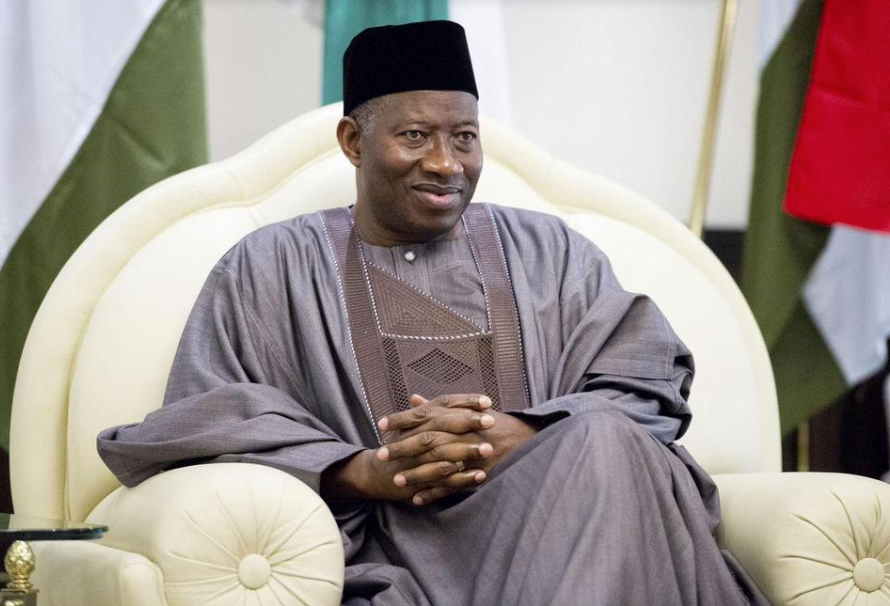
The legal and political dimensions of former President Goodluck Ebele Jonathan’s increasingly anticipated 2027 presidential comeback are converging dramatically today as a court is set to hear a suit directly challenging his constitutional eligibility to contest the presidency — a legal battle that could determine whether Nigeria’s most consequential political comeback story of the decade is allowed to proceed or is stopped in its tracks by a judicial ruling before it even begins.
The eligibility suit, which cuts to the heart of one of the most debated constitutional questions in Nigerian political and legal circles, centres on the fundamental issue of whether Jonathan — who served as President from 2010 to 2015 and was democratically voted out of office after a single elected term — is constitutionally barred from seeking the presidency again under the provisions of the 1999 Constitution as amended.
Those arguing against Jonathan’s eligibility contend that the spirit and intent of Nigeria’s constitutional two-term limit provisions, read holistically, preclude a former president who has already occupied the office from seeking to return — regardless of the technical circumstances of how many full terms they served or how they came to occupy the office in the first instance.
Jonathan’s legal and political camp, however, has consistently maintained that the former President served only one elected term — having completed the remainder of the late President Umaru Musa Yar’Adua’s term before being elected in his own right in 2011 and subsequently losing his re-election bid in 2015 — and therefore retains the full constitutional right to seek one additional term under the clear and unambiguous provisions of the Nigerian constitution.
The court’s ruling on the eligibility suit — whenever it comes — is expected to be one of the most politically consequential judicial decisions of Nigeria’s pre-2027 season, with enormous implications not just for Jonathan personally but for the entire landscape of the 2027 presidential contest.
A ruling in Jonathan’s favour would immediately transform the 2027 presidential race — potentially clearing the way for the entry of a candidate with unparalleled national name recognition, a proven track record of democratic conduct, significant cross-regional appeal, and the backing of a broad and growing coalition of political figures and civic stakeholders who see in his candidacy the best hope for a credible, experienced, and unifying opposition to President Tinubu.
A ruling against his eligibility, conversely, would deal a devastating blow to the Jonathan comeback narrative — removing from the 2027 contest a figure whose potential entry had already dramatically altered the political calculations of virtually every other major presidential aspirant across party lines.
Jonathan himself, who has indicated he will consult widely before making any formal declaration, is understood to be closely monitoring the court proceedings — with his inner circle watching the legal landscape carefully before committing to any definitive public announcement of his presidential intentions.
Political analysts say that today’s court hearing represents a critical turning point — one that will either open or close the door on what would be one of the most extraordinary political comebacks in African democratic history.
CDA News Nigeria will provide live coverage and immediate reporting of any developments from today’s court hearing as they emerge.
All rights reserved ©2026 CDA News Nigeria.
For news tips or inquiries, contact us at info@cdanews.ng or visit our headquarters at 348 Ikwerre Road, Port Harcourt, Rivers State.


