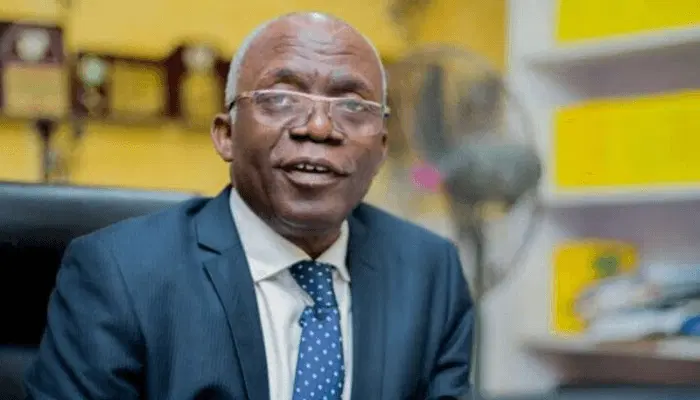
President Bola Ahmed Tinubu has made a significant and strategically calculated political move, formally assigning his Chief of Staff, Femi Gbajabiamila, and Special Adviser on Political Matters, Ibrahim Masari, to oversee the All Progressives Congress (APC) primary elections for National Assembly positions — both Senate and House of Representatives seats — as the ruling party accelerates its internal preparations for the 2027 general elections.
The presidential directive, which positions two of Tinubu’s most trusted and senior aides at the very forefront of the APC’s primary coordination process, is widely interpreted as a deliberate and firm assertion of presidential authority over the party’s internal electoral machinery — a clear signal that the President intends to maintain close and direct oversight of how the ruling party selects its legislative candidates ahead of one of Nigeria’s most consequential electoral cycles in recent memory.
According to well-placed party insiders, the decision to involve officials of such seniority and proximity to the Presidency reflects President Tinubu’s determination to avoid the kind of chaotic, rancour-filled, and litigation-prone primary processes that have historically weakened the APC’s electoral performance and internal cohesion in previous election cycles — particularly the damaging crisis that characterised the party’s 2022 primaries ahead of the 2023 general elections.
The involvement of Gbajabiamila — a former Speaker of the House of Representatives and one of the most experienced legislative minds in Nigeria — is seen as particularly significant, given his deep familiarity with the dynamics of National Assembly politics, constituency power structures, and the complex web of interests that typically define the competition for federal legislative seats across Nigeria’s thirty-six states.
Masari, a veteran political operative and one of the APC’s most experienced strategists, brings an equally formidable understanding of grassroots party mobilisation, state-level political alignments, and the art of managing competing interests within a large and diverse political coalition — skills that will be essential in navigating the inevitable tensions and rivalries that accompany any high-stakes primary process.
The APC has already commenced early preparations for the 2027 elections, with consultations, political alignments, and mobilisation activities ongoing at various levels across the country. The oversight role assigned to Gbajabiamila and Masari is expected to bring a measure of order, structure, and presidential authority to this process — streamlining the conduct of primaries and addressing potential disputes before they escalate into public crises that could damage the party’s electoral prospects.
Political observers have described the move as a proactive and calculated step by the Tinubu administration to consolidate its grip on the APC’s internal structures, while simultaneously projecting an image of a ruling party committed to internal democracy, transparency, and orderly succession planning ahead of 2027.
As the 2027 elections draw progressively closer, all eyes in the Nigerian political establishment will be trained on the APC’s internal primary process — with the outcome expected to significantly shape the broader political landscape and competitive dynamics of the next general election.
CDA News Nigeria will continue to track and report all developments surrounding the APC’s 2027 primary preparations and Nigeria’s wider electoral landscape.
All rights reserved ©2026 CDA News Nigeria.
For news tips or inquiries, contact us at info@cdanews.ng or visit our headquarters at 348 Ikwerre Road, Port Harcourt, Rivers State. CDA News Nigeria is committed to protecting your privacy — your data is never shared with third parties without explicit consent.