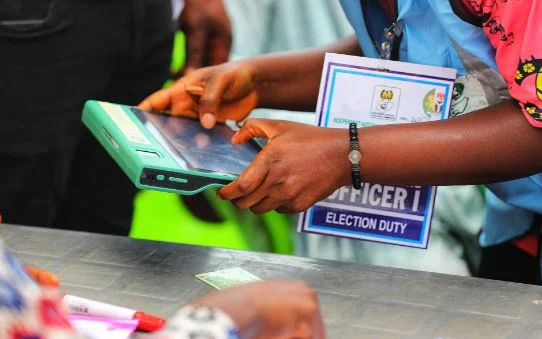
The Senate has approved electronic transmission of election results but retained manual collation as a backup in the event of network failure, a decision that has drawn sharp criticism from opposition parties and civil society groups.
Following days of nationwide protests and public outcry, the upper chamber reconsidered Clause 60(3) of the Electoral Act (Amendment) Bill, 2026, during an emergency plenary on Tuesday. The revised clause mandates presiding officers to transmit results electronically to the INEC Result Viewing Portal (IReV) after Form EC8A is signed and stamped. However, where electronic transmission fails due to communication challenges, the manually signed EC8A shall remain the primary basis for collation and declaration.
Senate President Godswill Akpabio urged dissenting senators to move counter-motions, but the chamber adopted the amendment via voice vote after the withdrawal of a formal division call by Senator Enyinnaya Abaribe.
A 12-member conference committee chaired by Senator Simon Lalong was constituted to harmonise the Senate version with the House of Representatives’ bill. Members include Senators Orji Uzor Kalu, Abba Moro, and Tahir Monguno. Akpabio directed the committee to conclude within one week for presidential assent by end of February.
Reactions Trail Amendment
Senator Orji Uzor Kalu defended the amendment as a “balanced approach” that ensures voters in network-challenged areas are not disenfranchised. Senator Natasha Akpoti-Uduaghan dissented, insisting on real-time transmission to restore public confidence.
Former Vice President Atiku Abubakar described the manual backup clause as a recipe for “confusion and chaos,” urging opposition parties to unite against it. Ex-Governor Rotimi Amaechi joined protesters at the National Assembly, warning that real-time transmission would save lives during elections. Nasir El-Rufai said he would have joined the protests if in Nigeria.
Omoyele Sowore called for an “electoral revolution,” while the PDP labelled the manual proviso a “backdoor attempt” to weaken reforms. The ADC hailed the reversal as a “victory for public pressure” but urged vigilance. Civil society groups warned the loophole invites manipulation.
With the 2027 elections approaching, analysts say the final outcome will shape public trust in Nigeria’s electoral process.
—
Disclaimer: This report is based on parliamentary proceedings and statements from political actors. CDA News Nigeria presents all sides without editorial bias.
© 2026 CDA News Nigeria, All rights reserved.
Privacy Policy | Contact Us